


Zimbabwe’s Blueberry Export to China Shows Africa’s Growing Trade Potential
Africa’s export landscape is changing rapidly. A recent development from Zimbabwe shows how African countries are expanding beyond traditional markets and entering major global consumer destinations through trade agreements, agricultural development, and improved market access.
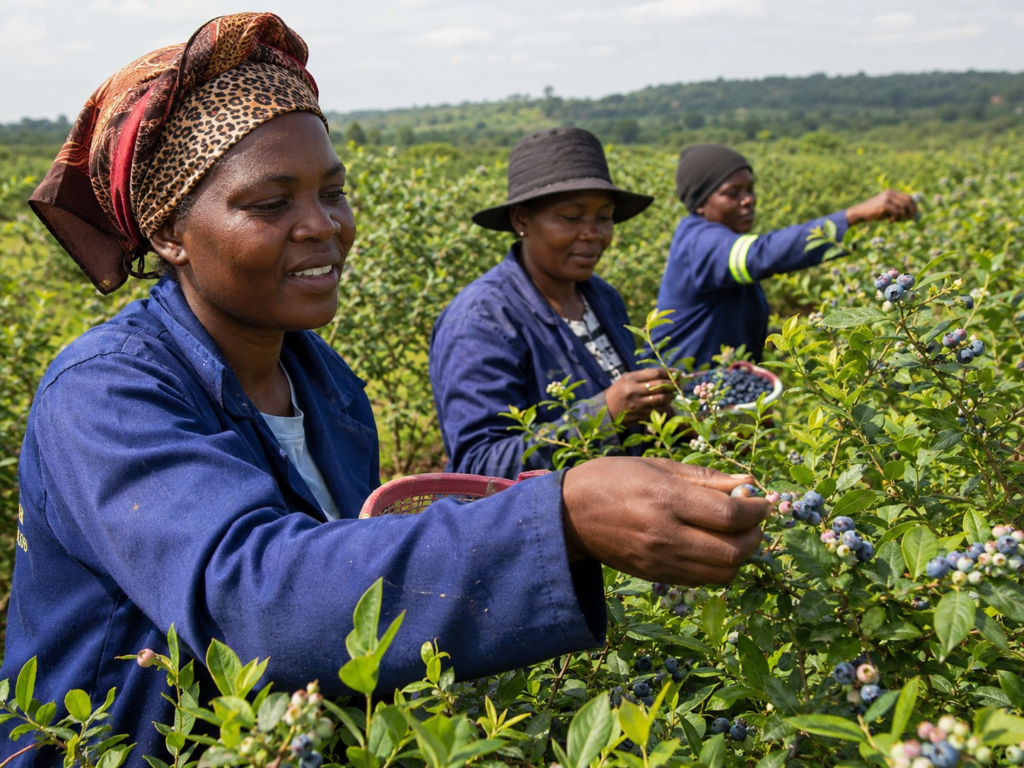
According to Reuters, Zimbabwe has started exporting blueberries to China after the two countries agreed on a phytosanitary standards protocol in September 2025. The first shipment marks an important step for Zimbabwe’s horticulture sector and highlights a bigger trend across Africa: countries are increasingly working to turn agricultural strength into export growth.
Reuters reported that Zimbabwe is now Africa’s third-largest blueberry producer after Morocco and South Africa. The country expects to export around 12,000 metric tons of blueberries in 2026 from approximately 850 hectares, compared with 9,500 tons from 650 hectares in the previous year.
This development is also connected to China’s zero-tariff policy for 53 African countries, which Reuters noted came into effect on 1 May 2026. Through this policy, African exporters can access China’s large consumer market with greater competitiveness. For Zimbabwe, this creates a new opportunity to expand its blueberry exports beyond its existing markets such as the Netherlands, the United Kingdom, Germany, Spain, South Africa, Hong Kong, Malaysia, Singapore, and the United Arab Emirates.
Why This Matters for Africa–Bangladesh Trade
This story is not only about blueberries. It is a strong example of how African countries are becoming more active in global trade by improving production, meeting international standards, and entering high-demand markets.
For Bangladeshi exporters, manufacturers, investors, and business leaders, this is an important signal. Africa is not only a destination for imports; it is also becoming a competitive export region with growing trade partnerships across Asia, Europe, and the Middle East.
As African economies strengthen their export capacity, new business opportunities will also open in supporting sectors such as packaging, logistics, cold-chain solutions, agro-processing, machinery, fertilizer, technology, and trade finance. Bangladesh has experience and capacity in many of these areas.
Opportunities for Bangladeshi Businesses
The Zimbabwe–China blueberry trade development shows that international buyers are looking for reliable supply, quality standards, and strong trade partnerships. Bangladeshi businesses can explore opportunities in Africa in several ways:
Bangladeshi exporters can connect with African importers and distributors for products such as garments, pharmaceuticals, agro-products, jute, leather goods, plastics, light engineering products, and ICT solutions.
Bangladeshi companies can also support African producers through packaging materials, processing technology, logistics services, and business collaboration.
At the same time, African businesses can find Bangladesh as a trusted sourcing destination for quality products at competitive prices.
ABBF’s Role in Building Trade Connections
Africa Bangladesh Business Forum (ABBF) works to connect African and Bangladeshi businesses through trade events, B2B matchmaking, verified business networking, market information, and partnership opportunities.
As Africa expands its role in global trade, ABBF believes that Bangladesh must take a more active approach to building long-term commercial relationships with African markets.
The recent Reuters report on Zimbabwe’s blueberry exports to China is a reminder that trade opportunities are growing across Africa. For Bangladesh, this is the right time to explore, connect, and build partnerships with African businesses.
Conclusion
Zimbabwe’s first blueberry shipment to China reflects a broader shift in Africa’s trade journey. African countries are increasing production, meeting international market standards, and gaining access to major global markets.
For Bangladesh, this creates a valuable opportunity to engage with Africa not only as a market, but also as a partner in trade, investment, logistics, technology, and industrial growth.
Through platforms like ABBF, businesses from Bangladesh and Africa can work together to build stronger trade relationships and unlock new opportunities across both regions.
Source Reference: Information and data used in this article are based on Reuters’ report, “Zimbabwe begins blueberry shipments to China,” published on 7 July 2026.
You May Also Like