

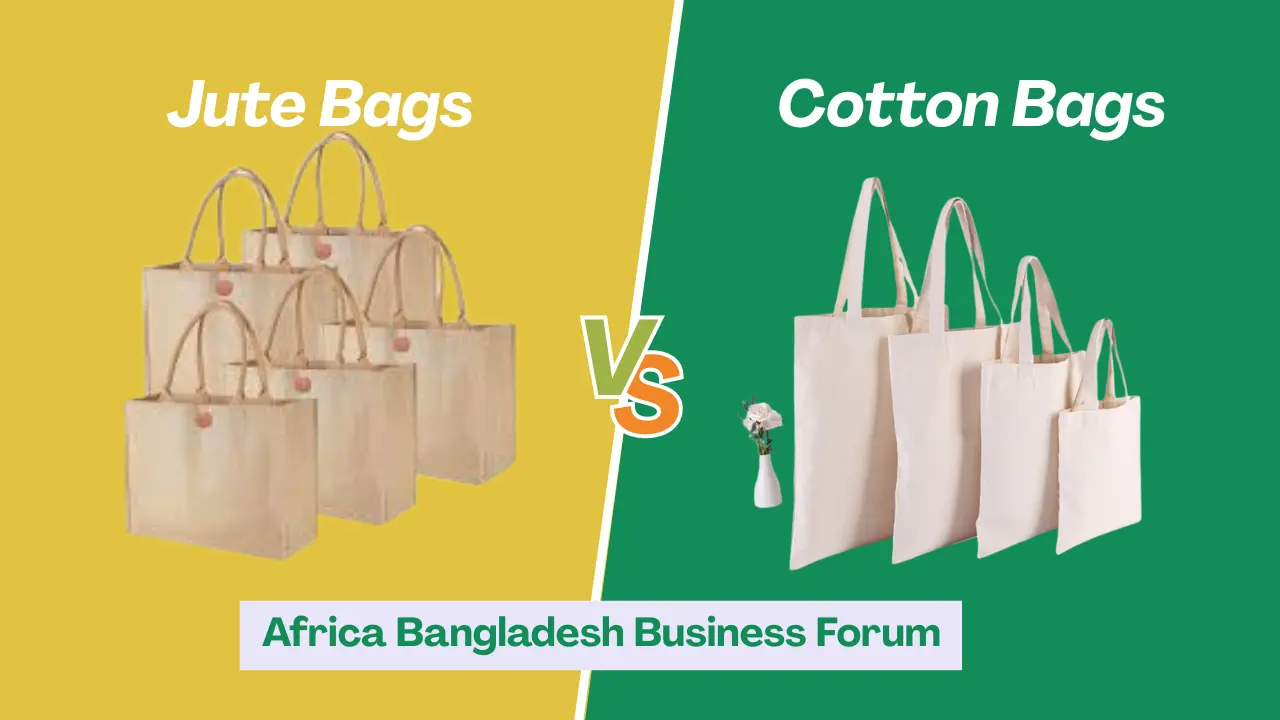
Jute vs Cotton Bags: Which Is Better for African Retailers?
As African retailers move toward more sustainable packaging, choosing the right reusable bag has become an important business decision. Jute and cotton are two of the most popular natural materials, but they serve different retail needs.
Jute bags are generally strong, structured and suitable for carrying heavier products. Cotton bags, meanwhile, feel softer, fold more easily and provide a smoother surface for detailed printing.
However, neither option is automatically better in every situation. The right choice depends on your products, customers, branding, budget and how often the bag will be reused.
This guide compares jute vs cotton bags to help supermarkets, fashion stores, gift shops, wholesalers and other African retailers select the most suitable option.
Retailers considering jute can also explore our guide on how to import jute bags from Bangladesh.
Jute vs Cotton Bags: Quick Comparison
| Feature | Jute Bags | Cotton Bags |
|---|---|---|
| Strength | Strong and suitable for heavier products | Strong enough for everyday retail use |
| Structure | Firm and holds its shape well | Soft and flexible |
| Appearance | Natural, textured and rustic | Smooth, clean and refined |
| Printing | Best for bold logos and simple designs | Suitable for detailed and multicolour designs |
| Portability | Less compact because of its structure | Lightweight and easy to fold |
| Water requirements | Jute is predominantly rain-fed | Cotton production can require significant water, depending on the growing region |
| Chemical inputs | Jute generally requires relatively small amounts of fertilizer and pesticides | Requirements vary between conventional, organic and recycled cotton |
| Product lifespan | Often suitable for repeated heavy-duty use | Suitable for repeated light-to-medium use |
| Typical retail use | Groceries, agricultural products, wine, gifts and promotional packaging | Fashion, books, gifts, events and lifestyle retail |
| Cost | Often competitive for standard bulk orders | Varies significantly by fabric weight and cotton type |
| End of life | Natural jute can biodegrade, although coatings may affect this | Natural cotton can biodegrade, although printing, dyes and synthetic components may affect this |
The environmental impact of any reusable bag depends on its complete life cycle, including raw materials, manufacturing, transportation, washing and the number of times customers actually reuse it. Therefore, retailers should focus not only on the material but also on durability and repeated use.
Understanding Jute Bags
Jute is a natural plant fibre known for its coarse texture, strength and distinctive golden-brown appearance. Manufacturers weave the fibre into fabrics that can be used for shopping bags, sacks, promotional packaging, home décor and industrial products.
The crop is predominantly rain-fed and generally requires relatively small quantities of fertilizer and pesticides. These characteristics have helped jute gain attention as a renewable material for reusable products.
Bangladesh is one of the world’s principal centres of jute production and has an established industry producing raw fibre, yarn, sacks, shopping bags and diversified jute goods. The country’s Export Promotion Bureau also maintains a directory of registered Bangladeshi jute exporters.
Advantages of Jute Bags
Strong and Suitable for Heavier Products
Jute fibres create a firm and relatively rigid fabric. As a result, properly constructed jute bags can carry groceries, bottled products, agricultural goods and other heavier items.
Retailers can strengthen the bags further with reinforced stitching, padded handles, internal lining or laminated panels.
This makes jute particularly useful for:
- Supermarkets
- Grocery stores
- Agricultural retailers
- Wine and beverage shops
- Gift stores
- Homeware businesses
- Corporate promotional campaigns
For Nigerian businesses, our guide to the Nigeria jute import market provides additional market information.
Natural and Recognizable Appearance
Jute has a textured surface that immediately communicates a natural and environmentally conscious image. Consequently, retailers can use jute packaging to reinforce a brand identity built around agriculture, craftsmanship, organic products or sustainability.
Its natural appearance works particularly well for:
- Organic food stores
- Coffee and cocoa brands
- Agricultural businesses
- Handmade product retailers
- Eco-conscious supermarkets
- Hospitality and tourism companies
Suitable for Bold Branding
Jute bags provide a good surface for bold logos, short messages and simple graphic designs. Screen printing can produce attractive results, especially when the artwork uses strong lines and a limited number of colours.
However, the coarse weave may not reproduce very small text, fine lines or highly detailed images as precisely as cotton.
Potentially Competitive for Bulk Orders
Standard jute bags can be cost-effective when ordered in commercial quantities. Nevertheless, the final price depends on several factors, including:
- Bag dimensions
- Fabric weight
- Handle material
- Printing method
- Lamination
- Internal lining
- Order quantity
- Packaging
- Shipping destination
Therefore, retailers should compare quotations using the same specifications rather than selecting a supplier based only on the lowest unit price.
Businesses preparing an order can review our detailed guide on how to source jute shopping bags.
Limitations of Jute Bags
Jute is not the best option for every retailer.
The material is generally less flexible than cotton, so customers may find it harder to fold and carry in a pocket or small handbag. Furthermore, untreated jute may absorb moisture and can lose its shape if stored incorrectly.
Some manufacturers add plastic lamination to improve water resistance and structure. However, lamination can reduce the product’s biodegradability. Retailers should therefore request a complete material specification before advertising a bag as plastic-free or fully biodegradable.
The coarse surface can also limit highly detailed printing. Brands that require photographic images, small lettering or complex artwork may achieve better results with cotton.
Understanding Cotton Bags
Cotton bags are made from woven cotton fabric and are widely used in fashion, bookselling, events, gifts and promotional campaigns.
They are usually softer and more flexible than jute bags. In addition, their smoother surface supports detailed printing and a more refined appearance.
Cotton bags come in several forms, including:
- Conventional cotton
- Organic cotton
- Recycled cotton
- Canvas
- Lightweight calico
- Heavy cotton duck fabric
- Cotton blends
Each type has different costs, durability levels and environmental considerations. Therefore, retailers should not treat all cotton bags as identical.
Advantages of Cotton Bags
Soft and Premium Appearance
Cotton bags have a smooth texture that can feel more refined than jute. This makes them suitable for fashion retailers, boutiques, bookstores, cosmetics businesses and premium gift shops.
Moreover, retailers can choose different fabric weights to create either a lightweight promotional tote or a heavier premium shopping bag.
Excellent Printing Surface
The tight and smooth weave of cotton allows printers to reproduce detailed logos, illustrations, text and multicolour artwork.
Therefore, cotton may be the better choice when branding is the retailer’s main priority.
Common printing methods include:
- Screen printing
- Digital printing
- Heat transfer
- Embroidery
- Direct-to-garment printing
The best method depends on the artwork, fabric weight, order size and intended use.
Lightweight and Foldable
Cotton bags can usually fold into a compact size. As a result, customers can keep them in a handbag, backpack or vehicle and reuse them when shopping.
This convenience can increase the likelihood that customers will use the bag repeatedly, which is essential because reusable bags deliver greater value when they replace many single-use bags.
Washable
Many cotton bags can be washed, although care instructions vary according to the fabric, printing and construction.
Retailers should ask suppliers whether washing may cause:
- Shrinkage
- Colour fading
- Print damage
- Handle distortion
- Fabric weakening
Clear care instructions can help customers extend the useful life of the bag.
Limitations of Cotton Bags
Cotton production can involve substantial land, water and agricultural inputs. However, the exact impact varies considerably according to the growing region, irrigation method, farming practices and whether the material is conventional, organic or recycled.
In addition, cotton bags may need to be reused many times before their higher production impact is offset. One widely cited UK life-cycle study estimated that a cotton carrier bag would need substantial repeated use to achieve a lower global-warming impact than a lightweight plastic bag. The precise number should not be applied universally, but the finding demonstrates why long-term reuse matters.
Cotton bags may also lose shape more easily than structured jute bags, particularly when made from lightweight fabric. Consequently, retailers carrying heavy or sharp products should select a suitable fabric weight and reinforce the stitching.
Which Bag Is More Sustainable?
Jute often has several agricultural advantages because it is predominantly rain-fed and generally requires relatively small quantities of fertilizer and pesticides. Cotton, meanwhile, offers excellent reusability and can perform differently when manufacturers use recycled fibres or improved agricultural practices.
However, material alone does not determine sustainability.
A complete assessment should consider:
- How the crop was grown
- Energy used during manufacturing
- Dyes and chemical treatments
- Plastic coatings or laminations
- Product durability
- Shipping distance
- Washing requirements
- Number of actual reuses
- End-of-life options
For example, a durable jute bag used 100 times may provide more value than a lightweight cotton bag used only twice. Likewise, a well-made recycled cotton bag used for several years may be preferable to a poorly constructed jute bag that fails quickly.
Therefore, the most sustainable bag is generally one that customers can and will reuse many times.
Retailers can learn more about Bangladesh’s role in this sector in our guide to global jute sustainability.
Which Bag Is More Durable?
For carrying heavy groceries and maintaining a firm shape, jute is often the stronger option. Its coarse fibres and structured weave make it suitable for demanding retail applications.
Cotton can also be durable, particularly when manufacturers use heavy canvas and reinforced construction. However, lightweight cotton totes may stretch or wear faster under heavy loads.
Before ordering either material, retailers should test:
- Handle strength
- Stitch quality
- Fabric weight
- Seam reinforcement
- Load capacity
- Resistance to repeated use
A physical sample and load test will provide more reliable information than a supplier’s general description.
Which Bag Is Better for Branding?
Cotton usually performs better for detailed artwork because its smooth surface allows for finer printing.
Choose cotton when your design includes:
- Small lettering
- Detailed illustrations
- Multiple colours
- Photographic elements
- Fine brand patterns
Jute is often better for simple, bold branding.
Choose jute when your design includes:
- A large company logo
- A short slogan
- One or two print colours
- A natural or handcrafted aesthetic
- Simple promotional messaging
Before mass production, ask the supplier to prepare a printed sample or digital mock-up. In addition, confirm the exact print dimensions, colours and placement.
Which Bag Is More Cost-Effective?
Jute can be cost-effective for supermarkets, grocery chains and businesses ordering standard bags in large quantities. Cotton pricing, meanwhile, varies significantly according to the fabric’s weight, weave, certification and fibre source.
However, retailers should calculate more than the initial unit cost.
A proper comparison should include:
- Product price
- Printing charges
- Sample costs
- Packaging
- Inspection
- Freight
- Customs duties
- Local taxes
- Storage
- Expected product lifespan
For example, a slightly more expensive bag may deliver better value if customers can reuse it for a much longer period.
Choose Jute Bags When
Jute may be the right option when your business prioritizes:
- Strong carrying capacity
- A natural and rustic appearance
- Grocery or agricultural products
- Bold and simple branding
- Structured packaging
- Competitive bulk sourcing
- A visible alternative to disposable plastic bags
Jute is particularly suitable for supermarkets, grocery stores, agricultural businesses, food brands, gift companies and corporate promotional campaigns.
Retailers can also compare specific products in our guide to eco-friendly jute products for Africa.
Choose Cotton Bags When
Cotton may be more appropriate when your business prioritizes:
- A soft and refined appearance
- Detailed or colourful printing
- Lightweight packaging
- Easy folding and portability
- Fashion or lifestyle branding
- Washability
- A premium customer experience
Cotton is often suitable for boutiques, bookstores, fashion retailers, beauty brands, gift stores, exhibitions and promotional events.
A Hybrid Strategy May Work Best
Retailers do not always need to choose only one material.
For example, a supermarket may use strong jute bags for groceries while offering lightweight cotton totes for promotional campaigns. Similarly, a fashion retailer may use cotton for everyday purchases and premium jute bags for gift sets or seasonal collections.
A mixed strategy allows the retailer to match the bag to the product, customer and price point.
Why Source Jute Bags from Bangladesh?
Bangladesh has an established jute farming, processing and manufacturing ecosystem. In addition to raw fibre and traditional sacks, manufacturers produce shopping bags, wine bags, gift packaging, rugs, home décor and other diversified products.
International buyers may also request:
- Custom dimensions
- Printed logos
- Different handle materials
- Internal lining
- Lamination
- Zippers and closures
- Private labels
- Export packaging
The Export Promotion Bureau of Bangladesh lists companies operating in the country’s jute export sector, giving buyers an additional resource for supplier research.
However, buyers should still verify each supplier independently. Registration in a directory does not replace factory checks, quality inspections or proper commercial due diligence.
How to Source Jute Bags Safely
Before placing a commercial order, provide the supplier with a detailed request that includes:
- Bag dimensions
- Fabric weight
- Handle type
- Load capacity
- Printing requirements
- Required quantity
- Packaging instructions
- Destination port
- Delivery schedule
- Required certifications
Next, request a physical sample and compare quotations from multiple suppliers.
Retailers should also confirm:
- Minimum order quantity
- Production time
- Payment terms
- Quality-control process
- Export experience
- Material composition
- Shipping terms
- Replacement policy for defective goods
For a complete sourcing process, read our guide on how to source products from Bangladesh.
How ABBF Supports African Retailers
The Africa Bangladesh Business Forum helps strengthen trade and investment connections between African and Bangladeshi businesses.
ABBF supports importers through:
- Business introductions
- B2B matchmaking
- Supplier connections
- Trade events
- Market-entry assistance
- Business networking
- Sourcing support
Retailers looking for personalized assistance can submit their requirements through the ABBF B2B matchmaking service.
Businesses can also join ABBF Membership for broader access to networking, trade information and year-round business opportunities.
Find Suppliers Through Kingmansa
Kingmansa is a global B2B marketplace focused on making business easier in Africa and beyond.
Through Kingmansa, retailers can:
- Explore jute products
- Find potential suppliers
- Request quotations
- Discuss custom branding
- Compare commercial offers
- Build direct business relationships
Buyers can also access the ABBF marketplace gateway to explore additional sourcing opportunities.
Final Verdict: Jute or Cotton?
Choose jute bags when you need strength, structure, natural visual appeal and packaging suitable for groceries or heavier retail products.
Choose cotton bags when you need a softer premium finish, detailed printing and a lightweight bag that customers can fold easily.
Nevertheless, the material is only one part of the decision. Product construction, supplier quality, customer behaviour and repeated use are equally important.
For many African supermarkets, food businesses and agricultural retailers, jute offers a strong combination of durability, branding and natural appearance. Meanwhile, cotton remains an excellent option for boutiques, fashion brands, bookstores and promotional campaigns.
The best decision is the one that matches your products, customer expectations and long-term packaging strategy.
Ready to source customized reusable bags for your retail business?
Connect with suppliers through Kingmansa or submit your sourcing requirements to ABBF.
Frequently Asked Questions
Which is more durable, jute or cotton?
Jute is generally more structured and suitable for heavier products. However, heavyweight cotton canvas can also be highly durable. The final strength depends on fabric weight, stitching, handles and overall construction.
Are jute bags more sustainable than cotton bags?
Jute has several agricultural advantages because it is predominantly rain-fed and generally requires relatively small quantities of fertilizer and pesticides. However, the environmental impact of either bag depends on manufacturing, transportation, additional materials and how many times customers reuse it.
Which bag is better for printing?
Cotton is usually better for detailed, multicolour or highly precise designs. Jute works well for bold logos, short messages and simple artwork.
Are jute bags biodegradable?
Natural, untreated jute fibre is biodegradable. However, plastic lamination, synthetic handles, chemical coatings and blended fabrics may affect the biodegradability of the finished bag.
Can cotton bags carry heavy products?
Heavyweight cotton canvas bags with reinforced handles can carry substantial loads. Lightweight promotional cotton totes, however, may not be suitable for heavy groceries or bottled products.
Which bag is better for supermarkets?
Jute is often suitable for supermarkets because it is structured and can support heavier goods. Nevertheless, the retailer should test the bag’s load capacity before placing a large order.
Which bag is better for fashion retailers?
Cotton is often preferable for fashion retailers because of its soft appearance, portability and smooth printing surface. A premium jute bag can also work well for brands seeking a natural or handcrafted image.
Why source jute bags from Bangladesh?
Bangladesh has an established jute industry and produces raw fibre, yarn, bags, sacks and diversified jute products. Buyers can access a broad range of manufacturers, customization options and export-ready products.
Can Bangladeshi manufacturers customize jute bags?
Many manufacturers offer custom sizes, handles, colours, printing, labels, lining and packaging. Buyers should confirm minimum order quantities, sample costs and production specifications directly with the supplier.
How can African retailers find jute bag suppliers?
Retailers can search through Kingmansa, request support from the Africa Bangladesh Business Forum or submit a B2B matchmaking request.
You May Also Like