

The Ultimate 6-Step Guide to Profitable Garment Imports from Bangladesh for African Businesses
Updated: August 2026
Importing garments from Bangladesh can create significant opportunities for African wholesalers, retailers, fashion brands, distributors and institutional buyers.
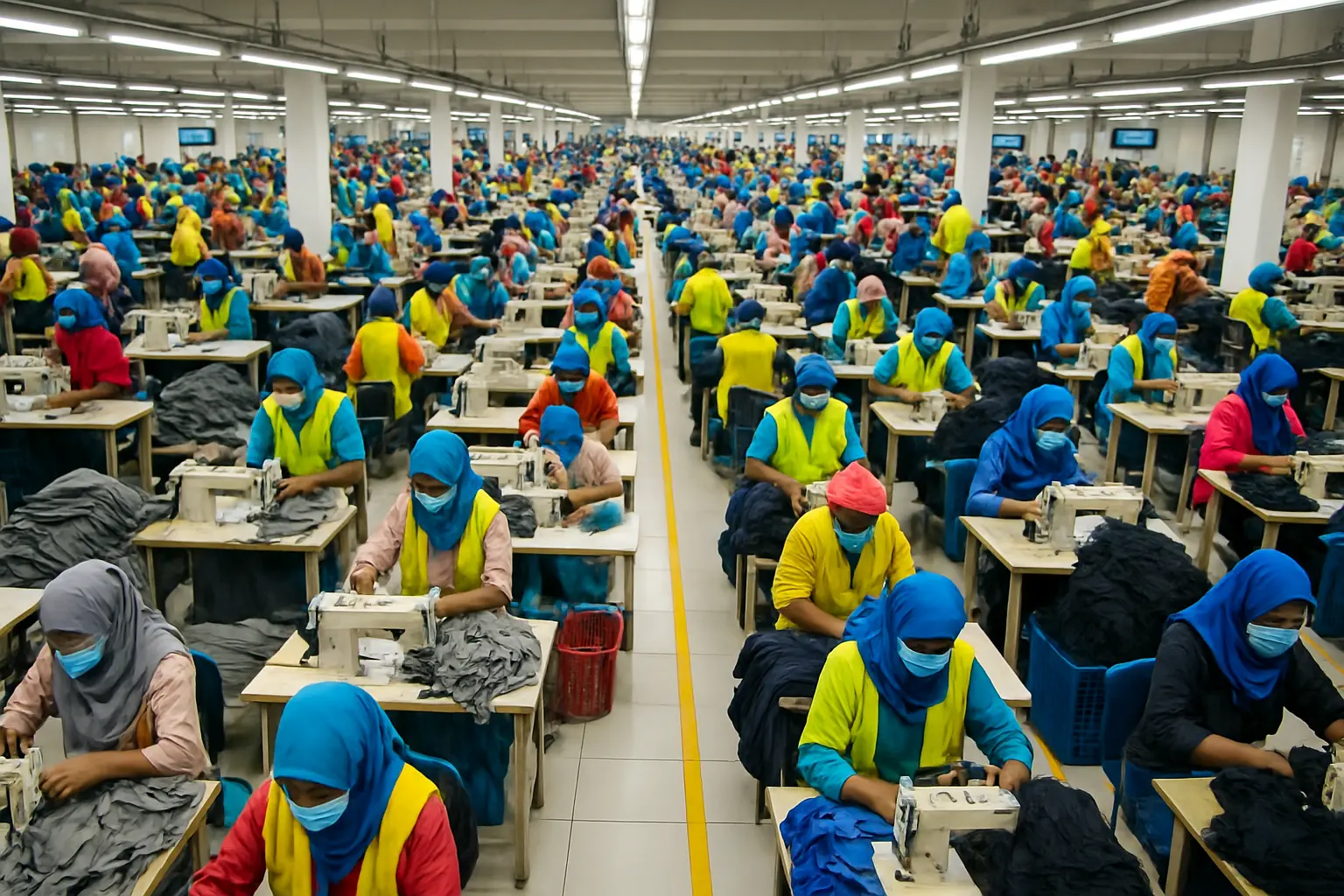
Bangladesh has developed one of the world’s largest apparel manufacturing ecosystems, producing knitwear, woven garments, denim, uniforms, workwear, basic apparel, fashion products and home textiles for international markets.
According to the Bangladesh Garment Manufacturers and Exporters Association (BGMEA), apparel produced in Bangladesh is exported to buyers in more than 150 countries.
For African businesses, however, profitable sourcing is not simply about finding the cheapest factory.
Success depends on choosing the right supplier, specifying the right product, understanding the true landed cost, controlling quality, using secure payment terms and managing logistics correctly.
This guide explains the process in six practical steps.
Why African Businesses Source Garments From Bangladesh
Bangladesh has spent decades developing a specialized garment manufacturing ecosystem.
The country has manufacturers covering a wide range of products, including:
- T-shirts
- Polo shirts
- Shirts
- Trousers
- Denim
- Jeans
- Knitwear
- Sweaters
- Jackets
- Sportswear
- Workwear
- Uniforms
- School uniforms
- Children’s clothing
- Underwear
- Home textiles
- Promotional garments
This manufacturing depth can allow African importers to source both large-volume basic garments and more customized products.
Bangladesh can be particularly attractive to:
- Fashion retailers
- Supermarkets
- Uniform suppliers
- Clothing wholesalers
- Government contractors
- School suppliers
- Corporate uniform companies
- Hotels
- Hospitals
- Security companies
- Industrial employers
- E-commerce retailers
The key is to source strategically.
Step 1: Define Exactly What You Want to Import
The first mistake many buyers make is contacting factories before clearly defining their requirements.
A supplier cannot give you an accurate quotation if your specification is vague.
Before requesting prices, determine:
Product
Specify exactly what you need.
For example:
Men’s 100% cotton crew-neck T-shirt
is much more useful than:
We need T-shirts.
Fabric
Specify:
- Fabric composition
- GSM or fabric weight
- Knit or woven construction
- Stretch requirements
- Finish
- Colour
For example:
100% combed cotton single jersey, 180 GSM
Sizes
Define your required size range.
African markets can have different sizing requirements from European or Asian markets, so buyers should not automatically accept a factory’s standard size chart.
Confirm measurements for:
- Chest
- Length
- Sleeve
- Waist
- Hip
- Inseam
Colours
Specify:
- Pantone reference
- Solid colour
- Melange
- Printed pattern
- Multiple colourways
Branding
Determine whether the product requires:
- Printed logo
- Embroidery
- Woven label
- Care label
- Size label
- Hangtag
- Barcode
- Custom packaging
Quantity
Factories generally quote according to order quantity.
A quotation for 500 pieces can be significantly different from one for 50,000 pieces.
Ask about the supplier’s MOQ, or Minimum Order Quantity, before proceeding.
Step 2: Find and Verify the Right Bangladesh Garment Supplier
Finding factories online is easy.
Finding a reliable factory that can produce your exact product at the required quality and delivery schedule is much more important.
Do not select a supplier simply because it offers the lowest price.
Before placing an order, verify:
- Legal company registration
- Factory location
- Manufacturing capability
- Export experience
- Production capacity
- Product specialization
- Certifications
- Major markets served
- Quality-control system
- References
- Banking information
Manufacturer or Trading Company?
Ask whether you are dealing with:
- A factory
- A buying house
- A sourcing agent
- A trading company
Each can have legitimate roles.
The important issue is transparency.
If you believe you are buying directly from a manufacturer but the company is actually subcontracting production elsewhere, your quality and delivery risks can increase.
Check Product Specialization
A factory that produces excellent knit T-shirts may not be the right supplier for tailored suits.
Similarly, a denim factory may not specialize in sweaters.
Match the supplier to the product.
Ask for Certifications Where Relevant
Depending on your market and customer requirements, certifications or compliance programs may cover areas such as:
- Quality management
- Environmental management
- Organic textiles
- Recycled materials
- Social compliance
- Green buildings
- Chemical management
Do not request certifications simply because they sound impressive.
Determine what your country’s regulations or your end customer actually requires.
Use Verified Supplier Networks
African buyers can also use the Africa Bangladesh Trade Marketplace, powered by Kingmansa, to explore suppliers and cross-border trade opportunities.
For buyers who need more direct support, ABBF can assist through supplier identification, verification and B2B matchmaking.
Step 3: Request Samples and Confirm Quality Before Bulk Production
Never place a major garment order based solely on website photographs or WhatsApp images.
Samples are one of your most important risk-control tools.
Depending on the product and production stage, samples may include:
- Development sample
- Fit sample
- Size-set sample
- Colour sample
- Lab dip
- Print sample
- Pre-production sample
- Shipment sample
Check the Sample Carefully
Evaluate:
- Fabric quality
- GSM
- Stitching
- Measurements
- Shrinkage
- Colour
- Print quality
- Embroidery
- Zippers
- Buttons
- Labels
- Packaging
- Overall finishing
If necessary, wash the garment several times before approving bulk production.
Approve a Pre-Production Sample
Before mass production begins, both buyer and supplier should agree on an approved reference sample.
This sample becomes the standard against which bulk production can be evaluated.
Document the approval.
Do not rely solely on verbal agreement.
Step 4: Calculate the True Landed Cost and Profit Margin
A low factory price does not necessarily mean a profitable import.
African buyers need to calculate the landed cost.
Your landed cost can include:
Garment price + packaging + inland transport + export documentation + freight + insurance + customs duty + taxes + port charges + customs clearance + local transport
For example, suppose a garment costs US$4.00 FOB Bangladesh.
That does not mean your cost in Lagos, Nairobi, Accra, Johannesburg or Abidjan will be US$4.
After freight, duties, taxes, clearance and local distribution costs, the real cost may be significantly higher.
Understand Common Incoterms
Garment quotations may use terms such as:
EXW – Ex Works
The buyer generally assumes responsibility from the factory.
FOB – Free on Board
The supplier delivers the goods onboard the vessel at the agreed Bangladesh port under the applicable Incoterm.
CFR – Cost and Freight
The seller includes freight to the destination port, while risk allocation follows the relevant Incoterm.
CIF – Cost, Insurance and Freight
The seller includes freight and specified insurance to the destination port.
Confirm the exact Incoterm and named port in your contract.
Calculate Your Target Margin Before Ordering
Work backwards from the expected selling price in your market.
Suppose your expected wholesale price is US$8 per garment.
Your total landed cost cannot be US$7.80 if you still need to cover:
- Warehousing
- Sales commissions
- Local distribution
- Marketing
- Financing
- Unsold inventory
- Business overhead
- Profit
Calculate your target margin before negotiating with suppliers.
Step 5: Protect the Transaction With Clear Contracts, Payments and Quality Control
This is one of the most important steps.
A profitable deal can quickly become a loss if payment terms, product specifications and responsibilities are unclear.
Put the Agreement in Writing
Your purchase agreement or sales contract should specify:
- Buyer
- Seller
- Product
- Fabric
- GSM
- Colours
- Sizes
- Quantity
- Unit price
- Total value
- Packaging
- Labels
- Delivery date
- Incoterm
- Port of loading
- Destination
- Inspection requirements
- Payment terms
- Claims procedure
Attach your technical specification and approved sample references where appropriate.
Choose Appropriate Payment Terms
International garment transactions may use:
- Letter of Credit
- Telegraphic Transfer
- Advance payment
- Documentary collection
- Structured payment arrangements
The right method depends on:
- Order size
- Buyer-seller relationship
- Country
- Banking environment
- Transaction history
- Risk level
For a new supplier relationship, avoid transferring a large unsecured payment without proper verification.
Inspect Before Shipment
For substantial orders, consider a pre-shipment inspection.
Inspection may include:
- Quantity
- Measurements
- Workmanship
- Colour
- Labels
- Packaging
- Carton markings
- Defects
For higher-value orders, independent third-party inspection may provide additional protection.
Step 6: Manage Shipping, Customs and Delivery to Africa
Production is only half of the process.
Your garments still need to arrive at the destination in good condition, with correct documentation and without unnecessary customs delays.
Common Export Documents
Depending on the transaction and destination, documents can include:
- Commercial invoice
- Packing list
- Bill of Lading or Air Waybill
- Certificate of Origin
- Export documentation
- Insurance documents
- Inspection certificate
- Product-specific documents
Requirements vary by destination.
Always confirm current import requirements with your customs broker or appropriate government authority before shipment.
Sea Freight or Air Freight?
Sea freight is generally more suitable for commercial garment volumes.
It is typically less expensive per unit but takes longer.
Air freight may be suitable for:
- Samples
- Small orders
- Urgent shipments
- High-value products
- Replacement goods
But the cost can significantly reduce your margin.
FCL vs LCL
FCL – Full Container Load
You use an entire shipping container.
LCL – Less than Container Load
Your goods share container space with other cargo.
For smaller buyers, LCL can allow lower initial volumes, although handling and destination charges should be examined carefully.
How to Make Garment Imports More Profitable
The six steps above reduce risk.
But profitability requires additional discipline.
Focus on the Right Product
Do not import products simply because a factory offers a low price.
Study what customers in your market actually buy.
Look at:
- Style
- Climate
- Colour preference
- Sizing
- Income levels
- Retail pricing
- Competitors
Negotiate Based on Volume
Larger orders can improve your bargaining position.
But do not over-order simply to obtain a lower unit price.
Unsold inventory can eliminate the saving.
Build Long-Term Supplier Relationships
Reliable suppliers become more valuable over time.
A strong relationship can lead to:
- Better payment terms
- Better prices
- Faster sampling
- Priority production
- Product development
- Lower communication risk
The objective should not always be finding a new factory for every order.
It should be building a dependable supply chain.
Reduce Middlemen Where Appropriate
Too many intermediaries can increase costs.
At the same time, a competent sourcing partner can add considerable value through verification, negotiation, quality control and coordination.
Evaluate what each intermediary contributes.
Consolidate Shipments
Businesses importing several product lines may be able to consolidate cargo to reduce logistics costs.
This requires careful coordination with factories and freight providers.
Which Garments Have Potential in African Markets?
Demand varies significantly across the continent.
However, product categories worth evaluating include:
Basic Apparel
- T-shirts
- Polo shirts
- Shirts
- Jeans
- Trousers
- Leggings
School Uniforms
Many African markets have significant demand for school uniforms.
Potential items include:
- Shirts
- Trousers
- Skirts
- Dresses
- Sweaters
- Sports uniforms
Corporate and Industrial Uniforms
Potential buyers include:
- Hotels
- Restaurants
- Security companies
- Factories
- Construction companies
- Hospitals
- Airlines
- Logistics companies
- Government institutions
Products may include:
- Workwear
- Coveralls
- Reflective garments
- Polo shirts
- Corporate shirts
- Medical uniforms
Fashion and Private Label
African retailers and fashion businesses can develop their own private-label collections using Bangladeshi manufacturers.
This can include custom:
- Designs
- Colours
- Labels
- Packaging
- Branding
Common Mistakes African Garment Importers Should Avoid
Choosing the Cheapest Supplier
A quotation substantially below the market can be a warning sign.
Compare quality, specifications and reliability, not only price.
Ordering Without Samples
Never assume bulk production will match photographs.
Approve physical samples.
Vague Product Specifications
“Good-quality T-shirt” is not a technical specification.
Define the fabric, GSM, measurements, colour, construction and finishing.
Paying an Unverified Supplier
Verify the company and banking information before transferring money.
Ignoring Quality Inspection
Discovering defects after the container arrives can be extremely expensive.
Miscalculating Customs and Logistics Costs
Always calculate landed cost, not only FOB price.
Ordering Too Much Initially
A first order should test both the supplier and your market.
Scale after successful transactions.
How ABBF Helps African Businesses Source Garments From Bangladesh
The Africa Bangladesh Business Forum (ABBF) helps connect African buyers with Bangladeshi manufacturers and exporters.
For garment sourcing, ABBF can support businesses through services such as:
- Supplier identification
- Supplier verification
- B2B matchmaking
- Sourcing support
- Market-entry guidance
- Trade facilitation
- Business delegations
- Factory visit coordination
- Visa and travel guidance
- Logistics coordination
- Institutional connections
This can be particularly valuable for an African buyer sourcing from Bangladesh for the first time.
Rather than contacting random suppliers online, buyers can use structured business networks to identify more suitable partners.
Find Bangladesh Garment Suppliers Through Kingmansa
Digital sourcing can make it easier for African importers to identify and compare potential suppliers.
Kingmansa is a global B2B marketplace connecting buyers, suppliers and exporters across international markets.
The Africa Bangladesh Trade Marketplace is powered by Kingmansa and provides another digital connection between African buyers and Bangladeshi suppliers.
African businesses can use Kingmansa to:
- Discover suppliers
- Search for products
- Compare sourcing opportunities
- Connect with exporters
- Develop B2B relationships
- Explore international sourcing opportunities
For Bangladeshi manufacturers, the marketplace provides an additional channel to reach African and international buyers.
Explore Kingmansa.com to discover garment suppliers and cross-border B2B opportunities.
Visit Bangladesh and Meet Garment Manufacturers
For serious buyers, visiting Bangladesh can provide significant advantages.
A sourcing trip can allow you to:
- Visit factories
- Inspect production capabilities
- Review samples
- Meet management teams
- Negotiate pricing
- Understand production processes
- Build stronger supplier relationships
ABBF can support eligible business travellers through Visa & Travel Guidance and business connections.
For African companies planning substantial garment sourcing programs, a factory visit can be a valuable step before committing to large volumes.
Become an ABBF Member
Businesses importing regularly from Bangladesh can benefit from being part of a structured Africa–Bangladesh trade network.
ABBF Business Membership provides access to business connections and trade opportunities between Africa and Bangladesh.
Membership benefits can include:
- B2B matchmaking
- Trade leads
- Business inquiries
- Delegations
- Webinars
- Trade events
- Member visibility
- Business support
- Event discounts
- Kingmansa-related membership benefits
Whether you are a garment wholesaler in Africa, a fashion retailer, institutional buyer or entrepreneur starting an import business, ABBF can help you develop stronger connections with the Bangladesh market.
Become an ABBF Member and build your sourcing network between Africa and Bangladesh.
Your 6-Step Garment Import Checklist
Before placing your next Bangladesh garment order, confirm that you have completed these six steps:
Step 1: Define your exact product, specifications and quantity.
Step 2: Find and verify an appropriate Bangladesh supplier.
Step 3: Obtain, test and approve samples.
Step 4: Calculate your complete landed cost and target profit margin.
Step 5: Agree on contracts, payment terms and quality inspection.
Step 6: Arrange shipping, customs clearance and final delivery.
Following these steps will not eliminate every international trade risk, but it can significantly improve your ability to control costs, protect quality and build a more reliable supply chain.
Conclusion
Bangladesh offers African businesses access to a deep and globally experienced garment manufacturing ecosystem.
But profitable garment importing is not simply about buying at the lowest possible factory price.
The strongest importers focus on the entire transaction:
Right product + right supplier + right quality + right landed cost + secure payment + reliable logistics.
Start with a carefully selected supplier and a manageable first order. Verify the business, approve samples, document your requirements, inspect the goods and understand the true cost before scaling.
The Africa Bangladesh Business Forum (ABBF) can help businesses build connections with Bangladeshi manufacturers through sourcing support, verification and B2B matchmaking.
Meanwhile, Kingmansa provides a digital channel for discovering suppliers and developing cross-border B2B opportunities.
Ready to start sourcing?
Become an ABBF Member to access B2B connections, sourcing opportunities and Africa–Bangladesh trade support.
Explore Kingmansa.com to discover Bangladesh suppliers and international sourcing opportunities.
Frequently Asked Questions
Why should African businesses import garments from Bangladesh?
Bangladesh has a large, specialized apparel manufacturing ecosystem covering knitwear, woven garments, denim, workwear, uniforms, fashion products and other categories. Buyers should still compare suppliers based on product specialization, quality, compliance, price and delivery capability.
How do I find reliable garment manufacturers in Bangladesh?
Buyers can use supplier directories, industry organizations, trade missions, B2B marketplaces and professional matchmaking. Always verify the supplier before placing a significant order.
ABBF also provides B2B Matchmaking between African buyers and Bangladeshi businesses.
Can I find Bangladesh garment suppliers online?
Yes. African businesses can explore the Africa Bangladesh Trade Marketplace powered by Kingmansa or visit Kingmansa.com to explore B2B suppliers and products.
What is MOQ in garment sourcing?
MOQ means Minimum Order Quantity. It is the smallest quantity a factory is normally willing to produce for a particular product, design, fabric or colour.
Should I request samples before ordering garments?
Yes. Buyers should normally review and approve relevant samples before committing to bulk production. The approved sample and technical specification can then serve as references for quality control.
What is the difference between FOB and CIF?
FOB and CIF are international trade terms that allocate certain costs, responsibilities and risks between the buyer and seller differently. Buyers should use the current Incoterms definitions and specify the named port in their contracts.
How do I calculate the cost of importing garments from Bangladesh?
Calculate the full landed cost, including the product, packaging, inland transport, freight, insurance where applicable, customs duty, taxes, clearance, port charges and transportation to your warehouse.
Is it safe to pay a Bangladesh supplier in advance?
Payment risk depends on the supplier, order value and transaction structure. Buyers should verify suppliers and avoid unnecessary unsecured exposure, particularly when dealing with a company for the first time.
Can ABBF help me source garments from Bangladesh?
Yes. ABBF supports Africa–Bangladesh business connections through supplier sourcing, B2B matchmaking, verification, market-entry support and other trade facilitation services.
Can ABBF arrange a factory visit in Bangladesh?
ABBF can support business connections and relevant trade visits depending on the buyer’s requirements and available arrangements. Travellers should also ensure that they meet Bangladesh’s current visa and entry requirements.
How can I become an ABBF member?
Businesses can review membership options through the ABBF Membership page.
What is Kingmansa?
Kingmansa is a global B2B marketplace connecting buyers and suppliers across international markets. It also powers the Africa Bangladesh Trade Marketplace.
You May Also Like