

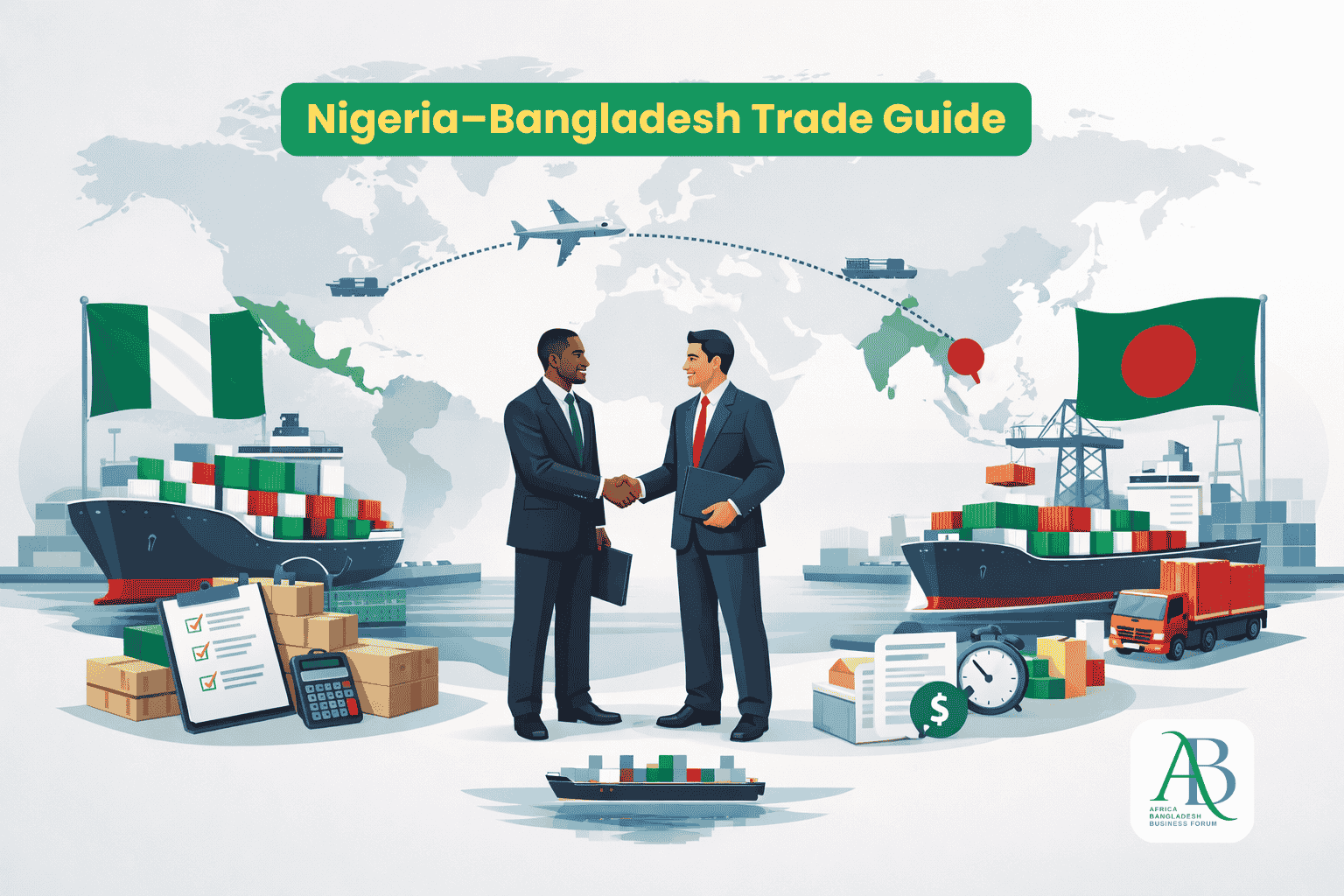
How to Start an Import-Export Business Between Nigeria and Bangladesh (2025 Guide)
Introduction
Trade between Nigeria and Bangladesh is steadily gaining momentum, driven by growing demand for textiles, garments, leather goods, pharmaceuticals, and light industrial products. As Africa’s largest economy and one of Asia’s leading manufacturing hubs, the two countries present strong complementary trade opportunities.
However, many entrepreneurs and SMEs struggle with where to begin — from regulatory compliance and supplier verification to payments and logistics. This guide provides a clear, practical roadmap for starting an import-export business between Nigeria and Bangladesh in 2025.
Why Nigeria–Bangladesh Trade Makes Sense
Trade between Nigeria and Bangladesh is steadily gaining momentum, driven by growing demand for textiles, garments, leather goods, pharmaceuticals, and light industrial products. As Africa’s largest economy and one of Asia’s leading manufacturing hubs, the two countries present strong complementary trade opportunities.
Nigeria’s expanding population, retail sector, and industrial demand create strong import needs, while Bangladesh offers:
- Competitive manufacturing costs
- Established export capacity
- Experience serving global markets
Key sectors driving bilateral trade include:
- Ready-made garments & textiles
- Footwear & leather products
- Pharmaceuticals & medical supplies
- Consumer goods & light machinery
This growing trade corridor presents significant opportunities for Nigerian importers and Bangladeshi exporters — if executed correctly.
Step 1: Business Registration & Legal Compliance
Before engaging in cross-border trade, ensure your business is properly registered.
For Nigerian importers:
- Register with the Corporate Affairs Commission (CAC)
- Obtain a Tax Identification Number (TIN)
- Register with Nigeria Customs Service (NCS)
- Open a domiciliary or trade-friendly business bank account
For Bangladeshi exporters:
- Company registration & trade license
- Export Registration Certificate (ERC)
- Membership with relevant trade bodies (e.g., BGMEA, BKMEA, etc.)
- Bank account enabled for export transactions
Compliance is essential to avoid shipment delays and payment issues.
Step 2: Identify the Right Products & Market Demand
Successful trade starts with demand validation. Nigerian importers should analyze:
- Local market demand and pricing
- Import regulations and restricted goods
- Quality standards and certifications
Popular imports from Bangladesh to Nigeria include:
- Apparel & fashion products
- Shoes and leather accessories
- Home textiles
- Packaged consumer goods
Understanding HS codes, duties, and import requirements early will save time and cost later.
Step 3: Finding Trusted Trade Partners
One of the biggest challenges in international trade is trust.
Common risks include:
- Fake suppliers or buyers
- Inconsistent product quality
- Contract disputes
- Advance payment fraud
To mitigate these risks, businesses should work through institutional platforms and verified trade networks rather than informal contacts or unverified online listings.
Organizations like the Africa Bangladesh Business Forum (ABBF) play a critical role by:
- Facilitating verified B2B matchmaking
- Connecting businesses through trade missions and forums
- Promoting ethical, transparent trade practices
Step 4: Payments & Currency Challenges
Cross-border payments between Nigeria and Bangladesh can be complex due to:
- FX restrictions
- Bank delays
- High transfer costs
- Limited buyer protection
Best practices include:
- Using escrow or milestone-based payments
- Clear pro-forma invoices and contracts
- Working with platforms that support local and international settlement
- Digital B2B marketplaces
Secure payment structures protect both importers and exporters and reduce transaction risk.
Step 5: Logistics, Shipping & Documentation
Efficient logistics is the backbone of international trade.
Key documents typically include:
- Commercial Invoice
- Packing List
- Bill of Lading / Airway Bill
- Certificate of Origin
- Insurance documents
Shipping options usually involve sea freight (cost-effective for bulk) or air freight (faster for urgent shipments). Partnering with experienced freight forwarders familiar with Africa–Asia trade routes is strongly recommended.
Step 6: Build Long-Term Trade Relationships
Beyond the first transaction, sustainable trade depends on:
- Clear communication
- Consistent quality control
- On-time payments and deliveries
- Cultural understanding
Trade forums, B2B platforms, and institutional networks help businesses move from one-off deals to long-term partnerships. Businesses seeking structured and verified trade opportunities can explore institutional trade facilitation tools and digital B2B infrastructure designed for Africa–Asia commerce.
Conclusion
Starting an import-export business between Nigeria and Bangladesh in 2025 is full of opportunity — but success depends on structure, trust, and the right partners.
By following a clear process, ensuring compliance, and engaging with institutional trade platforms, businesses can reduce risk and unlock sustainable growth across this emerging trade corridor.
About ABBF
The Africa Bangladesh Business Forum (ABBF) is a private-sector led platform dedicated to strengthening trade, investment, and business cooperation between Africa and Bangladesh through verified networks, events, and digital trade infrastructure.