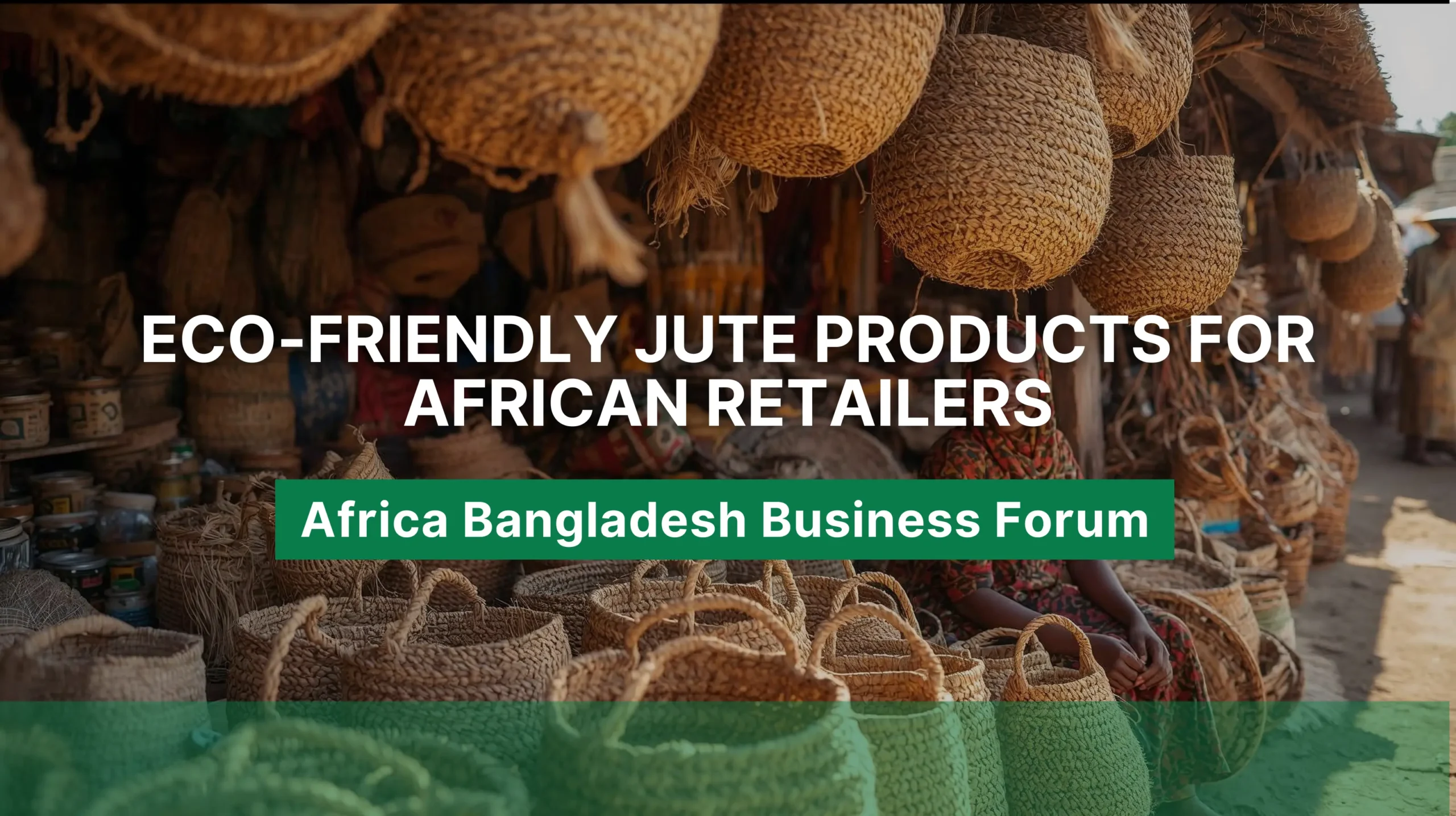


Exploring the Trade Horizons Between Bangladesh and Africa
Updated: August 2026
Trade between Bangladesh and Africa represents one of the most promising yet underexplored areas of South-South economic cooperation.
Bangladesh has developed globally competitive manufacturing capabilities in ready-made garments, textiles, pharmaceuticals, jute products, leather, ceramics, agro-processing, light engineering and other industries. Across Africa, expanding populations, urbanization, infrastructure development and growing consumer markets are creating increasing demand for many of these products.
At the same time, African countries are important suppliers of cotton, minerals, agricultural commodities and other raw materials needed by Bangladesh’s industries.
The opportunity is therefore not simply about Bangladesh exporting more products to Africa. It is about developing a stronger two-way economic relationship involving trade, sourcing, investment, manufacturing, technology, logistics and long-term business partnerships.
For companies on both sides, the next decade could open a new chapter in Bangladesh–Africa trade relations.
Why Africa Matters to Bangladesh
Africa consists of 54 internationally recognized countries and represents one of the world’s most diverse emerging-market regions.
The continent’s population, expanding cities, infrastructure investment and growing consumer demand create opportunities across sectors ranging from healthcare and food to manufacturing, technology and consumer goods.
For Bangladesh, Africa also provides an opportunity to diversify beyond traditional export destinations.
Bangladesh’s export economy remains heavily concentrated in ready-made garments. According to FY2025–26 export figures reported from Export Promotion Bureau data, Bangladesh exported approximately US$48 billion, with RMG contributing around US$38.7 billion, or more than 80% of total export earnings.
Expanding into African markets can therefore support two important objectives:
- Geographic diversification by developing new export destinations.
- Product diversification by promoting pharmaceuticals, jute, leather, ceramics, ICT, engineering and other Bangladeshi products alongside garments.
Read our detailed analysis of Bangladesh–Africa Trade Relations for a broader overview of trade, exports, imports and investment opportunities.
What Can Bangladesh Export to Africa?
Bangladesh already possesses manufacturing capabilities that align with demand across many African markets.
Ready-Made Garments and Textiles
Bangladesh is one of the world’s leading apparel manufacturing countries.
African markets create opportunities across:
- Ready-made garments
- Basic apparel
- Uniforms
- Workwear
- Knitwear
- Woven garments
- Fabrics
- Home textiles
- Institutional clothing
The opportunity is not limited to selling finished clothing. Bangladesh can also explore partnerships with African manufacturers, distributors, retailers and institutional buyers.
For businesses in this sector, read our Guide to Exporting Ready-Made Garments from Bangladesh to Africa.
Pharmaceuticals and Healthcare Products
Bangladesh has developed a strong pharmaceutical manufacturing sector with the potential to expand further across African markets.
Many African countries continue to depend heavily on imported medicines and healthcare products.
Potential opportunities include:
- Generic medicines
- OTC medicines
- Medical supplies
- Hospital consumables
- Diagnostic products
- Healthcare equipment
Market entry requires careful attention to product registration, national regulatory requirements and reliable local distribution partnerships.
Jute and Eco-Friendly Products
Bangladesh’s position as a major producer of jute creates another important opportunity.
Growing international attention to environmentally sustainable products creates potential demand for:
- Jute bags
- Shopping bags
- Packaging
- Jute yarn
- Home décor
- Geotextiles
- Agricultural applications
- Biodegradable products
Bangladesh has also been promoting jute products in its recent economic engagement with Morocco.
Ceramics and Building Materials
Rapid urbanization and infrastructure development across African cities are increasing demand for construction and household products.
Bangladeshi manufacturers can explore markets for:
- Ceramic tableware
- Tiles
- Sanitary products
- Building materials
- Household products
Leather and Footwear
Bangladesh’s leather and footwear industry can target both mass-market and higher-value segments across African economies.
Potential products include:
- Shoes
- Leather bags
- Belts
- Wallets
- Accessories
- Finished leather products
Light Engineering and Machinery
Industrialization and agricultural modernization create opportunities for Bangladeshi engineering companies.
Potential exports include:
- Agricultural machinery
- Pumps
- Small industrial equipment
- Spare parts
- Electrical products
- Light machinery
- Processing equipment
ICT and Digital Services
Trade between Africa and Bangladesh does not have to involve physical products.
Bangladesh’s growing technology sector can provide:
- Software development
- IT outsourcing
- Digital services
- Fintech solutions
- E-commerce technology
- Artificial intelligence services
- Business process outsourcing
- Cybersecurity and cloud services
Digital services can allow Bangladeshi companies to enter African markets without the logistics costs associated with physical exports.
What Does Bangladesh Import From Africa?
Bangladesh–Africa trade is a two-way relationship.
African countries supply important commodities and raw materials used by Bangladeshi industries.
Cotton
Cotton has historically been one of the most important African exports to Bangladesh.
Bangladesh’s textile and garment industry requires substantial quantities of imported cotton, and African producers have become important suppliers.
Countries across West and East Africa produce high-quality cotton that can support Bangladesh’s textile manufacturing supply chain.
This creates a natural trade relationship:
Africa supplies raw materials → Bangladesh manufactures value-added products → finished goods can reach African and global markets.
Agricultural Commodities
African markets can supply Bangladesh with agricultural products and commodities depending on demand, price and regulatory conditions.
Potential areas include:
- Cotton
- Coffee
- Cocoa
- Sesame
- Cashew nuts
- Pulses
- Fruits
- Agricultural raw materials
Minerals and Industrial Raw Materials
Africa possesses significant reserves of minerals and industrial commodities.
As Bangladesh’s manufacturing economy develops, sourcing partnerships with African countries could become increasingly important.
The future relationship can therefore extend far beyond traditional export-import transactions.
From Trade to Investment and Joint Ventures
The next stage of Bangladesh–Africa economic relations should not focus only on shipping products from one continent to another.
There is significant potential for joint ventures and investment partnerships.
Bangladeshi businesses could explore:
- Local manufacturing in African markets
- Pharmaceutical production
- Textile and garment manufacturing
- Agro-processing
- Consumer-product manufacturing
- Technology ventures
- Logistics
- Distribution networks
- Agricultural projects
African companies can similarly explore Bangladesh as a manufacturing, sourcing and investment destination.
Joint ventures can be particularly valuable because they combine Bangladeshi manufacturing expertise with African market knowledge, distribution networks and local resources.
Bangladesh Is Deepening Its Engagement With Africa
Bangladesh’s Africa strategy is increasingly moving beyond traditional diplomacy.
In May 2026, Bangladesh’s State Minister for Foreign Affairs emphasized the country’s intention to deepen engagement with African nations and expand economic cooperation.
One of the clearest examples came in Morocco.
Bangladesh–Morocco B2B Platform
In May 2026, the first-ever Bangladesh–Morocco B2B Meeting Platform was launched in Rabat.
According to the Ministry of Foreign Affairs of Bangladesh, the initiative was designed to create stronger private-sector partnerships involving trade, investment, industrial development, innovation and sustainable growth.
A Moroccan business delegation is also expected to visit Bangladesh in November 2026 to explore economic zones, industrial facilities and investment opportunities.
The two countries have discussed cooperation in areas including:
- Textiles
- Pharmaceuticals
- Ceramics
- Agriculture
- Shipbuilding
- ICT
- Artificial intelligence
- Jute products
- Industrial training
- Investment
The development provides an important model for how Bangladesh can build stronger commercial relationships across Africa.
Bangladesh’s Diplomatic Presence in Africa
Trade expansion also requires stronger diplomatic and institutional relationships.
Bangladesh currently maintains resident diplomatic missions in nine African countries:
- Algeria
- Egypt
- Ethiopia
- Kenya
- Libya
- Mauritius
- Morocco
- Nigeria
- South Africa
These missions provide Bangladesh with important institutional connections across North, East, West and Southern Africa.
They can support diplomatic engagement, consular services, trade promotion and connections with local institutions.
Read our complete guide to Bangladeshi Missions in Africa.
Businesses can also consult our companion guide to African Embassies and Diplomatic Missions in Bangladesh.
The AfCFTA Opportunity
Another major development shaping African trade is the African Continental Free Trade Area (AfCFTA).
The AfCFTA aims to create a more integrated continental market for goods and services across Africa.
For Bangladeshi businesses, this matters because African markets should increasingly be considered not only as individual countries but also as interconnected regional trade ecosystems.
A company establishing a successful presence in one strategically located African market may eventually gain opportunities to expand into neighbouring countries.
For example:
- Nigeria can provide access to opportunities across West Africa.
- Kenya can serve as a gateway to East Africa.
- South Africa provides access to Southern African commercial networks.
- Morocco provides strategic connections to North and West Africa as well as Europe.
- Egypt connects North Africa, the Middle East and major global shipping routes.
Companies should still examine tariffs, rules of origin, local regulations and AfCFTA implementation on a country-by-country basis.
For official information, businesses can consult the AfCFTA Secretariat.
Which African Markets Should Bangladeshi Exporters Consider?
There is no single “African market.”
The continent consists of economies with different languages, regulations, consumer preferences, currencies and distribution structures.
Bangladeshi exporters should therefore select markets based on their particular product.
Potential commercial hubs include:
Nigeria
Nigeria’s population and large consumer market make it particularly important for consumer goods, garments, pharmaceuticals, food products and industrial products.
Explore our Nigeria Market Overview and Nigeria–Bangladesh Import Export Guide.
Kenya
Kenya provides access to one of East Africa’s most important commercial hubs.
Potential sectors include pharmaceuticals, garments, consumer goods, agricultural machinery, ICT and industrial products.
South Africa
South Africa has one of Africa’s most developed retail, industrial and financial ecosystems.
The market may be attractive for higher-value products, pharmaceuticals, garments, leather products, technology and manufacturing partnerships.
Egypt
Egypt’s population, industrial base and strategic location create opportunities in both trade and investment.
Read our Bangladesh–Egypt Trade Relations guide.
Morocco
Morocco’s manufacturing base, logistics infrastructure and connections with Africa and Europe make it particularly interesting for trade and investment partnerships.
Francophone West Africa
Countries including Senegal, Côte d’Ivoire and Guinea can offer opportunities in consumer goods, pharmaceuticals, garments, agriculture, infrastructure and industrial products.
Language, local partnerships and market knowledge are especially important when entering Francophone markets.
How to Enter an African Market
Finding demand is only the beginning.
Successful market entry requires a structured process.
Step 1: Select the Right Country
Start with product-market fit rather than trying to target the entire continent.
Research:
- Import demand
- Competition
- Tariffs
- Regulations
- Consumer preferences
- Distribution structure
- Payment environment
- Logistics
Our Africa Market Entry Strategy Guide provides a step-by-step framework.
Step 2: Identify Reliable Buyers and Partners
A good local importer or distributor can make the difference between successful market entry and an expensive failure.
Businesses should verify:
- Company registration
- Import history
- Business references
- Physical presence
- Distribution capability
- Payment capacity
- Reputation
Read our detailed guide on How to Find Buyers in Africa.
Step 3: Understand Regulatory Requirements
Product registration, labelling, standards, customs procedures and import licences vary by country and product.
Pharmaceuticals, food, cosmetics and regulated products usually require particularly careful preparation.
Step 4: Build Relationships
Business relationships remain extremely important across African markets.
Trade shows, B2B meetings, chambers, diplomatic missions and business delegations provide opportunities to establish trust before major transactions.
Step 5: Start Carefully
For a new buyer or market, consider beginning with samples or manageable commercial quantities before scaling.
Payment structures should also reflect the level of trust and transaction risk.
Digital B2B Trade: Explore Kingmansa
Physical trade missions and face-to-face meetings remain important, but digital platforms are increasingly changing how buyers and suppliers find each other.
Kingmansa is a global B2B marketplace connecting buyers and suppliers across international markets.
As ABBF’s official B2B marketplace partner, Kingmansa extends Africa–Bangladesh business connections into the digital marketplace.
Bangladeshi manufacturers and suppliers can use the platform to showcase products and develop international visibility.
African buyers can use it to discover suppliers and sourcing opportunities from Bangladesh and other markets.
This combination of physical business networks and digital B2B connectivity can help make cross-border trade more accessible.
Explore Kingmansa.com and discover international B2B opportunities.
The Role of Africa Bangladesh Business Forum
The Africa Bangladesh Business Forum (ABBF) works to bridge the gap between market opportunity and practical business connections.
ABBF brings together:
- Exporters
- Importers
- Manufacturers
- Investors
- Chambers
- Government institutions
- Diplomatic missions
- Business leaders
Its services and activities include:
- B2B Matchmaking
- Market-entry support
- Trade and investment facilitation
- Business delegations
- Trade missions
- Trade Shows and Business Summits
- Visa and travel guidance
- Institutional connections
- Market intelligence
- Export and sourcing support
For businesses that know Africa represents an opportunity but do not know where to begin, ABBF can help identify suitable markets, partners and programs.
Become an ABBF Member
Building a new international market requires relationships, information and consistent engagement.
ABBF Business Membership provides businesses with access to an Africa–Bangladesh focused network and opportunities to participate in trade programs.
Membership benefits can include:
- B2B matchmaking
- Trade leads
- Business networking
- Trade delegations
- Webinars
- Business events
- Member visibility
- Event discounts
- Access to market opportunities
- Kingmansa-related membership benefits
Whether you are a Bangladeshi exporter seeking African buyers or an African company looking for Bangladeshi suppliers and business partners, ABBF provides a platform for building cross-border relationships.
Become an ABBF Member and start building your Africa–Bangladesh business network.
The Future of Bangladesh–Africa Trade
The potential of Bangladesh–Africa trade extends far beyond today’s transaction volumes.
Both regions possess complementary economic strengths.
Bangladesh brings:
- Large-scale manufacturing
- Competitive production costs
- Export experience
- Pharmaceuticals
- Apparel
- Jute
- Engineering
- Digital talent
Africa brings:
- Large emerging consumer markets
- Natural resources
- Agricultural commodities
- Investment opportunities
- Rapid urbanization
- Growing industrial demand
- A young population
Connecting these strengths can create opportunities not only for trade but also for manufacturing, investment, technology transfer and joint ventures.
The recent Bangladesh–Morocco B2B initiative demonstrates that this shift is already beginning.
The next step is to expand such engagement across more African markets.
Conclusion
The trade horizons between Bangladesh and Africa are expanding.
Africa offers Bangladesh an opportunity to diversify export markets, promote new products and build long-term economic relationships beyond traditional destinations.
Bangladesh, in turn, offers African businesses access to competitive manufacturing capabilities across garments, pharmaceuticals, jute, ceramics, leather, engineering, technology and consumer products.
But capturing this opportunity requires more than identifying potential demand.
Businesses need market intelligence, reliable partners, institutional relationships, trade facilitation, digital connectivity and consistent engagement.
The Africa Bangladesh Business Forum works to connect these elements by bringing businesses and institutions together across both regions.
If your company is ready to explore the opportunity:
Become an ABBF Member to access B2B connections, trade programs and Africa-focused business opportunities.
Explore Kingmansa.com to discover buyers, suppliers and digital B2B opportunities.
The future of Bangladesh–Africa trade will be built by businesses that turn diplomatic relationships and market potential into practical commercial partnerships.
Frequently Asked Questions
Why is Bangladesh focusing on trade with Africa?
Africa provides Bangladesh with opportunities to diversify beyond traditional export destinations while reaching large and growing consumer markets. African countries can also supply Bangladesh with commodities and raw materials required by its manufacturing industries.
What does Bangladesh export to Africa?
Bangladeshi export opportunities include ready-made garments, textiles, pharmaceuticals, jute products, ceramics, leather and footwear, food products, light engineering goods, consumer products and ICT services.
What does Bangladesh import from Africa?
Important imports include cotton and other agricultural commodities as well as raw materials and industrial inputs. Products vary significantly by African country.
Why is African cotton important for Bangladesh?
Bangladesh’s textile industry depends heavily on imported cotton. African cotton-producing countries have become important sourcing partners, creating a natural supply-chain connection between African agriculture and Bangladesh’s textile and apparel manufacturing industries.
What is the AfCFTA and why does it matter to Bangladesh?
The African Continental Free Trade Area is an initiative designed to increase economic integration and intra-African trade. For Bangladeshi companies, greater regional integration could make strategically located African markets more attractive as entry points for wider regional expansion.
Which African countries should Bangladeshi exporters target?
The best market depends on the product. Nigeria, Kenya, South Africa, Egypt and Morocco are among the markets worth evaluating, while countries across Francophone West Africa also present opportunities in selected industries.
How can Bangladeshi companies find buyers in Africa?
Companies can use trade missions, exhibitions, chambers of commerce, diplomatic networks, B2B matchmaking and digital marketplaces. ABBF also provides B2B matchmaking and market-entry support.
How does ABBF support Bangladesh–Africa trade?
ABBF connects exporters, importers, investors, institutions and business leaders through B2B matchmaking, market-entry assistance, trade missions, events, visa guidance and trade facilitation.
How can I become an ABBF member?
Businesses can review available membership options and apply through the ABBF Membership page.
What is Kingmansa?
Kingmansa is a global B2B marketplace and ABBF’s official B2B marketplace partner. It helps connect buyers and suppliers for cross-border trade opportunities.
Where can I learn how to enter an African market?
Start with ABBF’s Africa Market Entry Strategy Guide and How to Find Buyers in Africa for practical guidance.
You May Also Like