

Bangladeshi Apparel in Nigeria: Market Demand & Export Growth Insights
Bangladesh has become one of the world’s leading apparel exporters, and Bangladeshi Apparel in Nigeria is now emerging as a strong growth opportunity for manufacturers looking to diversify beyond traditional Western markets. With Nigeria’s rising population, expanding retail sector, and increasing demand for affordable ready-made garments, Bangladeshi exporters have a strategic window to enter and scale in Africa’s largest economy.
Nigeria’s import dependency in apparel, combined with Bangladesh’s global competitiveness in knitwear and woven garments, creates a complementary trade dynamic that forward-thinking exporters should not ignore.
Bangladeshi Apparel in Nigeria: Current Import Trends & Trade Landscape
Nigeria remains heavily dependent on imported garments due to gaps in large-scale industrial textile production. According to UN COMTRADE data compiled via Trading Economics, Nigeria imported approximately US$5.15 million worth of goods from Bangladesh in 2024, including:
| Category | Import Value (USD) |
|---|---|
| Knit Apparel | ~$968,000 |
| Non-Knit Apparel | ~$469,000 |
| Pharmaceuticals | ~$616,000 |
| Plastics | ~$814,000 |
Within this basket, apparel remains a visible and expandable segment.
Although current export numbers are still developing compared to Bangladesh’s exports to the EU and USA, the Nigeria clothing market represents an under-penetrated but high-potential destination.
For exporters aiming to expand Bangladeshi Apparel in Nigeria, early market entry provides first-mover advantage in building distributor relationships.
Why Nigeria’s Apparel Market Offers Strong Growth Potential
1.Expanding Youth Population
Nigeria has over 220 million people, with a large percentage under the age of 30. This young demographic drives demand for:
- T-shirts & polo shirts
- Denim & casual trousers
- Streetwear & fashion basics
- Affordable undergarments
Youth-driven consumer spending is a major factor shaping African apparel demand.
2. Growing Urban Retail Ecosystem
Major commercial hubs like Lagos, Abuja, Kano, and Onitsha host thousands of apparel traders and distributors. Informal and formal retail channels coexist, allowing exporters multiple entry points.
3. Demand for Affordable Quality Imports
Bangladesh’s RMG sector is globally recognized for:
- Competitive pricing
- Large-scale production capacity
- Compliance & sustainability improvements
- Fast lead times
These strengths align well with Nigeria’s import needs.
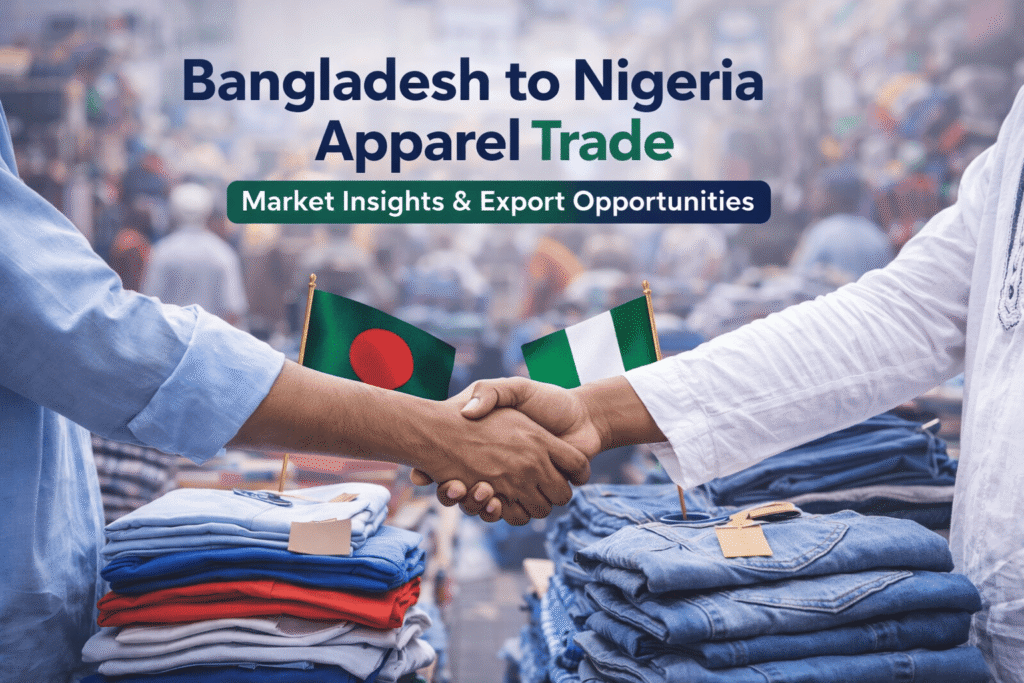
High-Demand Product Categories for Exporters
Bangladeshi Apparel in Nigeria: Product Segments with Opportunity
Exporters should prioritize:
✔ Casual Knitwear (T-shirts, polos)
✔ Denim & Woven Bottomwear
✔ Corporate Uniforms & Workwear
✔ Undergarments & Innerwear
✔ School Uniform Programs
Bangladesh’s Global Apparel Strength & Diversification Strategy
Bangladesh’s ready-made garment sector contributes more than 80% of national export earnings and is among the top global apparel exporters.
However, reliance on EU and US markets creates geographic concentration risk.
African markets, particularly West Africa, provide:
- Market diversification
- Growing middle-income consumers
- Increasing trade openness
- Regional trade integration under AfCFTA
This makes expanding Bangladeshi Apparel in Nigeria not just an opportunity — but a strategic necessity for long-term export stability.
Export Growth Opportunities for Bangladeshi Apparel
Despite global slowdowns in some markets, Bangladesh’s overall garment export industry remains strong and resilient. Ready-made garment exports contribute a substantial portion of the country’s total exports and have shown consistent growth, reflecting global competitiveness.
However, traditional trading partners like the EU and U.S. are experiencing market saturation and slower demand growth, motivating exporters to explore non-traditional markets such as Africa — with Nigeria at the forefront.
Comparison: Bangladesh’s Global Apparel Exports
| Region | Trend | Notes |
|---|---|---|
| European Union | Rising but slowing | Largest value markets |
| United States | Major importer | Significant buyer base |
| African Markets | Growing demand | Under-penetrated |
Breaking into Nigeria and wider West Africa enables diversification and helps mitigate geographic risk for export-dependent businesses.
Market Entry Challenges & Strategic Solutions
Entering Nigeria requires preparation:
⚠ Import regulations & customs compliance
⚠ Logistics planning via seaports (Lagos ports)
⚠ Distributor verification
⚠ Currency fluctuation risks
This is where structured support becomes essential.
How ABBF Supports Bangladeshi Exporters
The Africa Bangladesh Business Forum (ABBF) plays a critical role in strengthening trade ties between Bangladesh and African markets.
ABBF is not a marketplace; it is a business networking and trade development platform that:
- Builds business communities across Africa and Bangladesh
- Organizes international trade shows & business summits
- Facilitates B2B matchmaking
- Connects verified buyers and suppliers
- Promotes cross-border investment dialogue
Through events like the Africa Bangladesh Trade Show & Business Summit – Nigeria, exporters can meet real Nigerian importers face-to-face.
Join ABBF Business Network
If you want to explore Nigeria’s apparel market through verified trade connections, join ABBF’s business community and participate in upcoming Nigeria trade events.
Kingmansa: Simplifying Cross-Border Trade Execution
While ABBF builds relationships and networking ecosystems, Kingmansa executes trade digitally.
Kingmansa connects verified suppliers and global buyers, making export-import simple with local currency payments.
For exporters targeting Nigeria, Kingmansa provides:
✔ Verified buyer connections
✔ Structured B2B sourcing system
✔ Secure local currency payment solutions
✔ Transparent trade workflows
✔ Reduced cross-border payment friction
Currency risk and payment delays are common barriers in African trade. Kingmansa’s local currency payment infrastructure reduces uncertainty and simplifies transactions.
Register on Kingmansa Marketplace
List your apparel products, connect with Nigerian buyers, and manage export transactions securely.
Step-by-Step Strategy for Exporting Garments to Nigeria
If a Bangladeshi manufacturer wants to export garments to Nigeria:
- Conduct demand analysis for Nigeria clothing market
- Identify wholesale distributors
- Participate in ABBF Nigeria trade expo
- Register on Kingmansa marketplace
- Use local currency payment system
- Build long-term distribution agreements
This combined offline + online strategy maximizes visibility and conversion potential.
Why Now Is the Right Time
Nigeria’s economy continues to diversify beyond oil, while consumer goods imports remain essential.
Key drivers:
- Youth-led consumption growth
- Expanding SME retail networks
- AfCFTA regional integration
- Digital trade platform growth
Expanding Bangladeshi Apparel in Nigeria today allows exporters to secure early distributor loyalty before competition intensifies.
Final Thoughts
The growth potential for Bangladeshi garment exporters in Nigeria is real and measurable. While the current trade volume is developing, demand fundamentals are strong.
With the right support ecosystem:
- ABBF for networking & business community building
- Kingmansa for structured digital trade & local currency payments
Bangladeshi exporters can confidently expand into Africa’s largest market.